

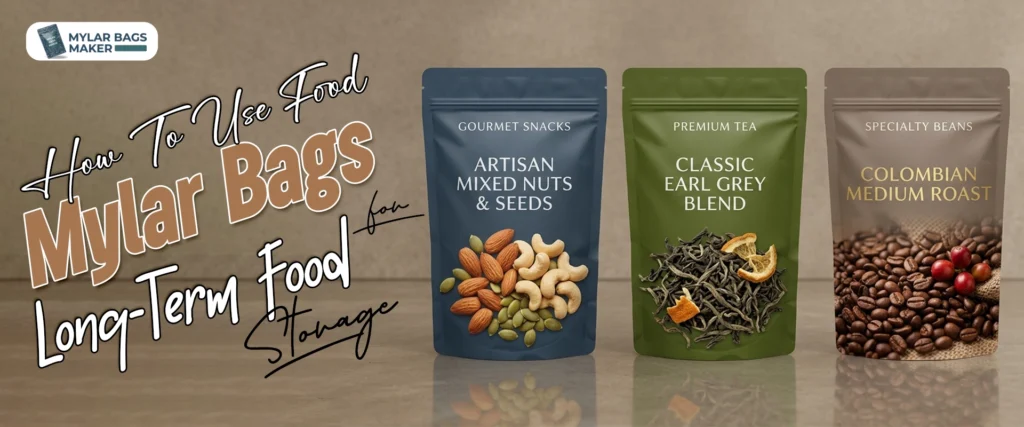
How To Use Food Mylar Bags For Long-Term Food Storage
Food security is becoming a priority day by day for all Canadian households. For this, quality packaging is mandatory. Such a packaging can retain the food’s freshness and keep every serving tasting like the best. This can be done with Mylar bags for food storage that offer exceptional protection against oxygen to moisture and light to pests.
Whether you have to store grains for a retail store or organize an emergency food supply, the use of the right packaging and storage techniques increases the shelf life. Mylar bags are combined with oxygen absorbers and proper sealing, which create an ideal environment to store dry foods.
These bags are not like ordinary packaging, as they have multi-layer material with high-end barrier properties that make them ideal for:
- Food storage
- Survival supplies
- Camping provisions
- Commercial packaging
- Pantry organization
In this blog, we will discuss:
- How to store food in Mylar bags
- Which foods perform best
- How long does rice last in Mylar bags
- Proper oxygen absorber selection
- Practical storage recommendations
Why Mylar Bags Are the Gold Standard for Food Storage
Mylar bag food storage extends shelf life as they have multiple layers that create a strong seal against the external environment. You just have to properly seal the bags and create a protective barrier that helps preserve the nutritional quality and aroma of the food. Not only this, but you can lock the freshness of food for years. Based on the conventional storage containers, mylar bags offer multiple advantages:
- Excellent oxygen barrier
- Superior moisture protection
- UV light resistance
- Reduced pest contamination
- Compact storage
- Long shelf life
- Cost-effective preservation
- Easy organization
- Heat-sealable design
- Multiple size options
Mylar bag food storage is specially designed with higher barrier properties that enhance the shelf life of edibles. Foods remain protected from oxidation and mold growth that is caused by humidity, after the sealing of the bags. These bags are heat-sealed after the removal of oxygen, which is the major contributor to food spoilage, such as:
| Storage Threat | Protection Method |
| Oxygen Exposure | Oxygen Absorbers |
| Moisture Damage | Mylar Barrier |
| Light Exposure | Aluminum Layer |
| Insect Activity | Airtight Seal |
The weather in Canada varies significantly throughout the year. There is high humidity during the summer and temperature fluctuations that can shorten the life of improperly stored food. Mylar bags for freeze-dried and other food items give additional protection by maintaining stable conditions regardless of the weather. The common products that are packed in Canada are as follows:
- Emergency preparedness
- Cottage food supplies
- Bulk warehouse purchases
- Long winter storage
- Camping meals
- Hunting supplies
- Freeze-dried food storage
- Pantry organization
When households purchase grains and other edibles in bulk, it reduces cost. The use of quality mylar bags helps in the reduction of waste and extension of shelf life, such as custom cookies mylar bags and custom mushroom mylar bags.
How to Store Food in Mylar Bags
It is relatively simple to learn how to store food in Mylar bags. You can follow the methods mentioned below for this:
Select Food-Grade Mylar Bags
Choose high-quality food bags that have sufficient thickness so that the food can remain fresh for a long duration. Thicker bags are durable and reduce accidental puncturing during storage. The recommended specifications are as follows:
- Food-grade materials
- BPA-free construction
- 5-7 mil thickness
- Heat-sealable opening
- Puncture resistance
Choose Low-Moisture Foods
When it comes to long-term storage, the packed items must have low moisture content. The following foods are ideal for emergency foods:
- White rice
- Pinto beans
- Black beans
- Lentils
- Oats
- Pasta
- Flour
- Sugar
- Salt
- Freeze-dried vegetables
- Freeze-dried fruits
- Dehydrated meals
Sugar and slats should not be packed without oxygen. This is because they can dehydrate and harden into solid blocks. There are specific bag options based on the food items. Such as mylar bags for rice storage have 5 to 7 mil thickness for optimal puncture resistance.
Add the Correct Oxygen Absorber
The use of oxygen absorbers is necessary as they absorb the residual oxygen in the seal bags and reduce the spillage. You can select oxygen absorbers based on the bag’s volume and food density. This will give you the following benefits:
- Prevent oxidation
- Preserve flavor
- Reduce insect eggs
- Extend shelf life
- Protect nutrients
Heat Seal Properly
Heat sealing is essential to prevent external oxygen from contaminating the packed food. Make sure that the seal is continuous and without any wrinkles or gaps. For this use the following:
- Impulse sealer
- Household clothing iron
- Hair straightener
- Commercial heat sealer
Store in the Right Environment
Even if you are using the best quality packaging, you can store the packed items in the perfect storage condition. The use of buckets is common in Canada for the packaging of food items that protect against rodents and physical damage. The ideal conditions are:
- Cool temperatures
- Dry location
- Low humidity
- Dark environment
- Stable climate
Mylar Bags for Rice Storage
As rice is one of the common food items that are purchased in bulk, there is special emphasis given to it. Rice is an emergency food that is affordable and versatile in nature. Mylar bags for rice storage have a 5 to 7 mil thickness, as they are sensitive to light and moisture during long storage. Different types of rice have different shelf lives. For instance, brown rice has a shortened lifespan because the oils in it become rancid over time. The best rice type that you can pack is:
- Long-grain white rice
- Jasmine rice
- Basmati rice
- Medium-grain rice
- Arborio rice
The question of how long does rice last in Mylar bags depends on several factors. Under ideal conditions, white rice sealed in oxygen absorber bags can remain usable for decades. While brown rice lasts only a few years. Low temperature is also effective in enhancing the shelf life of rice. The factors on which the shelf life of rice depends are as follows:
- Rice variety
- Storage temperature
- Moisture level
- Oxygen removal
- Bag quality
- Heat seal integrity
Best Foods for Mylar Bag Storage
You cannot pack all the food in the Mylar bags. Foods that have high moisture and fat content have a shorter life span. The reason for this is that these food items oxidize, and moisture further promotes spoilage. The following foods are the best choice to be packed in a mylar bag storage:
| Food | Storage Suitability | Oxygen Absorber |
| White Rice | Excellent | Yes |
| Dry Beans | Excellent | Yes |
| Lentils | Excellent | Yes |
| Pasta | Excellent | Yes |
| Rolled Oats | Excellent | Yes |
| Flour | Good | Yes |
| Freeze-Dried Meals | Excellent | Yes |
| Powdered Milk | Good | Yes |
| Sugar | Excellent | No |
| Salt | Excellent | No |
Your packaging is as important as the food itself. Dry and low moisture foods respond best when packed in storage mylar. These edibles contain less water and have low bacterial growth.:
| Food | Storage Suitability | Oxygen Absorber | Estimated Shelf Life |
| White Rice | Excellent | Yes | 25–30 Years |
| Brown Rice | Moderate | Yes | 6–12 Months |
| Pinto Beans | Excellent | Yes | 25+ Years |
| Black Beans | Excellent | Yes | 25+ Years |
| Lentils | Excellent | Yes | 20–25 Years |
| Split Peas | Excellent | Yes | 20+ Years |
| Rolled Oats | Excellent | Yes | 20–30 Years |
| Pasta | Excellent | Yes | 20–30 Years |
| Flour | Good | Yes | 10–15 Years |
| Cornmeal | Fair | Yes | 3–5 Years |
| Sugar | Excellent | No | Indefinite |
| Salt | Excellent | No | Indefinite |
| Powdered Milk | Good | Yes | 10–15 Years |
| Freeze-Dried Fruits | Excellent | Yes | 20–30 Years |
| Freeze-Dried Vegetables | Excellent | Yes | 20–30 Years |
Mylar bag food storage oxygen absorber chart is as follows:
| Mylar Bag Size | Food Capacity | Oxygen Absorber |
| 1 Pint | 0.5 lb | 100 cc |
| 1 Quart | 1 lb | 300 cc |
| 1 Gallon | 4–5 lb | 300–500 cc |
| 2 Gallon | 8–10 lb | 500–1000 cc |
| 5 Gallon | 25–35 lb | 2000–2500 cc |
Common Mylar Food Storage Mistakes
The quality of mylar bags does not only depend on materials but also on the way you prepare the bags. Make sure you are not making the mistakes below.
- Using Thin Bags
- Storing High-Moisture Foods
- Incorrect Oxygen Absorber Size
- Poor Heat Sealing
- Warm Storage Conditions
Not all the mylar bags are manufactured for food contact. Choose food-grade materials that protect food quality and consumer safety. Always look for the following:
- Food-grade materials
- BPA-free construction
- High-barrier multilayer film
- Strong heat-sealable edges
- Puncture-resistant design
- Multiple thickness options
- Reliable manufacturing standards
To maximize food quality over time:
- Store your bags below 21°C whenever possible
- The storage areas must be dry and away from direct sunlight
- You must label each bag with the food name and packaging date
- Rotate inventory using the First In and First Out method
- Inspect bags periodically to avoid punctures or damaged seals
If you need premium quality food, mylar bags from our company are the best option. Mylar Bags Makers manufactures multiple styles and dimensions of customized bags at wholesale rates. Book now and start enhancing the longevity of your edibles.